Queer Lives and the Ideas That Shape Them
Books for Pride Month 2026
Pride Month invites reflection on identity, visibility, and the histories, structures, and lived experiences that continue to shape queer life. This reading list brings together works that move between the personal and the political, tracing how norms around gender and sexuality are constructed, contested, and reimagined. Spanning intimate archives, cultural history, legal analysis, and urban studies, these books offer grounded, critical perspectives for readers interested in the evolving landscape of LGBTQ+ lives and thought.
Histories of Gender and Sexuality
Napoleon’s Closet
The Emperor, the Priest, and the Men Who Invented Modern Fashion
Margaret Waller
A lively and unorthodox exploration of the paradoxical history of male clothing, Napoleon’s Closet unveils the origins of modern ideas about normative masculinity, queerness, and “the closet.” Margaret Waller shows when male fashion editors first associated women with fashion and urged men to renounce “feminine” frivolity in their dress. Looking at knee breeches, schoolboy and officer uniforms, priests’ robes, and imperial regalia, this book shows how misogyny and homophobia helped make Napoleon Bonaparte, Pierre Antoine Le Boux La Mésangère, and their peers men.
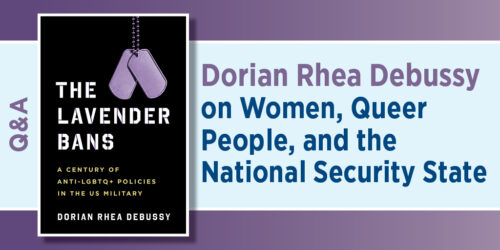
The Lavender Bans
A Century of Anti-LGBTQ+ Policies in the US Military
Dorian Rhea Debussy
The Lavender Bans is a comprehensive account of the evolution of anti-LGBTQ+ policies from World War I to the present. Bringing together interdisciplinary scholarship and close analysis of archival documents, Dorian Rhea Debussy offers new insights into the policies affecting LGBTQ+ people in the armed forces. Meticulously researched and rich in detail, this book sheds light on a long and troubling history—with deep contemporary relevance as exclusion of transgender people continues.
In imperial China, people moved away from the gender they were assigned at birth in different ways and for many reasons. Through close readings of court cases, Ming and Qing fiction, and nineteenth-century newspaper accounts, Matthew H. Sommer examines the social, legal, and cultural histories of gender crossing in late imperial China. He considers a range of transgender experiences, illuminating how certain forms of gender transgression were sanctioned in particular social contexts and penalized in others. An unprecedented account of China’s transgender histories, this book also sheds new light on a range of themes in Ming and Qing law, religion, medicine, literature, and culture.
Law, Policy, and Public Debate
By the Power Vested in Me
How Experts Shape Same-Sex Marriage Debates
Michael Stambolis-Ruhstorfer
Exploring the legalization of same-sex marriage in the United States and France, this book sheds new light on the power of experts to influence high-stakes democratic debates. Drawing on extensive interviews and ethnographic observation, Michael Stambolis-Ruhstorfer traces the divergences between the two countries, showing why some experts are ubiquitous in one but absent in the other. Through the story of the fight over gay rights, By the Power Vested in Me reveals how and why certain experts—but not others—obtain the authority to shape public opinion and policy.
Not in My Gayborhood
Gay Neighborhoods and the Rise of the Vicarious Citizen
Theodore Greene
Gay neighborhoods are disappearing—or so the conventional story goes. Exploring “gayborhoods” in Washington, DC, Theodore Greene investigates how neighborhoods retain their cultural identities even as their inhabitants change. He argues that the success and survival of gay neighborhoods have always depended on participation from nonresidents in the life of the community, which he terms “vicarious citizenship.” Examining the diverse placemaking strategies that queer people deploy to foster and preserve LGBTQ+ geographies, Not in My Gayborhood illuminates different ways of imagining urban neighborhoods and communities.
Intersex
A Manifesto Against Medicalization
Iain Morland
When children are born with sex attributes that do not fit expectations about male and female anatomy, it is standard medical practice to make their bodies look as “normal” as possible. Iain Morland provides breakthrough accounts of the traumatic effects of early childhood surgery, the consequences for attachments between children and parents, and the paradoxes of the pursuit of normality. Weaving together theoretical analysis with autobiographical insights, Morland grapples with the complexity of dismantling intersex medicine. Accessibly written and passionately argued, this book exposes the contradictions of the medical management of intersex.
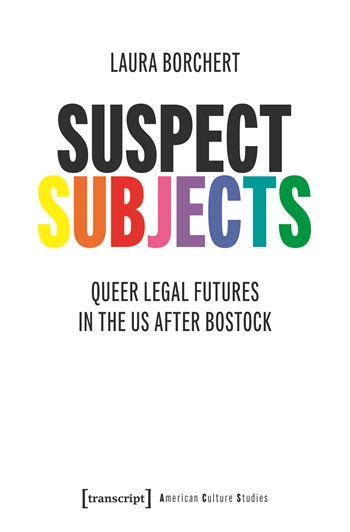
Suspect Subjects
Queer Legal Futures in the US after Bostock
Laura Borchert
transcript publishing
Distributed by Columbia University Press
When children are born with sex attributes that do not fit expectations about male and female anatomy, it is standard medical practice to make their bodies look as “normal” as possible. Iain Morland provides breakthrough accounts of the traumatic effects of early childhood surgery, the consequences for attachments between children and parents, and the paradoxes of the pursuit of normality. Weaving together theoretical analysis with autobiographical insights, Morland grapples with the complexity of dismantling intersex medicine. Accessibly written and passionately argued, this book exposes the contradictions of the medical management of intersex.
Literature and Cultural Life
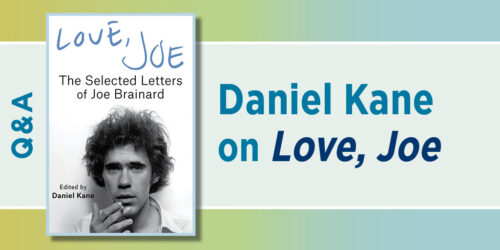
Love, Joe
The Selected Letters of Joe Brainard
Joe Brainard. Edited by Daniel Kane
An artist and writer whose charming and inventive works are at once modest and ambitious, Joe Brainard was one of the most distinctive figures on New York City’s vibrant cultural scene in the 1960s and 1970s. Love, Joe presents a selection of Brainard’s letters stretching from 1959 to 1993, offering an intimate view of his personal and artistic life. His letters to his partner, Kenward Elmslie, and others open a window onto the transformations of queer life during this period. These letters invite readers to share in his radical but gentle candor, his open-mindedness, and a sophisticated naiveté that helped him erase the conventional barriers between art and life.
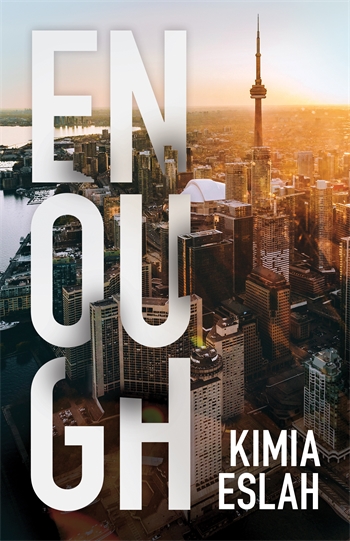
Enough is an empathetic missive to anyone working on equity, diversity, and inclusion—in cubicles, courtyards, and countless other spaces. Set amid the cubicles and courtyards of Toronto City Hall, Kimia Eslah’s third novel centers on three women of color navigating labyrinths at work, in love, and in life: Faiza Hosseini, a cutthroat executive with a proven record; Sameera Jahani, who is passionate about equity even though her girlfriend isn’t; and Goldie Sheer, whose unexpected work drama makes her question whether she is really enough. With grace and insight, Eslah bares three women’s experiences with structural discrimination, from microaggressions to corruption
Dirty Dragging
Performative Transpositions
Evelyn Annuß
mdwPress
Distributed by Columbia University Press
In Dirty Dragging, Evelyn Annuß reformulates queer theorizations of drag, exploring the ambivalence of transgressive performances under apartheid, Nazism, and Jim Crow through a transoceanic lens. Taking up the ambivalence of “dirty” performance modes spanning drag and carnival to propaganda, she extends readings of gender bending by incorporating perspectives on blackface and “racialized drag.”
Categories:Gender StudiesLGBTQIA studiesPride MonthReading List
Tags:and Other Transgender Histories from Late Imperial ChinaBy the Power Vested in Mecultural studiesDaniel KaneDirty DraggingDorian Rhea DebussyEnoughEvelyn AnnußGay NeighborhoodsGender IdentityGender StudiesIain MorlandInclusive Reading ListIntersexIntersex RightsJoeJoe BrainardKimia EslahLaura BorchertLGBTQ rightsLGBTQ+ BooksLGBTQ+ CultureLGBTQ+ Military HistoryLGBTQ+ PolicyLoveMargaret WallerMatthew H. SommerMichael Stambolis-RuhstorferNapoleon's ClosetNot in My GayborhoodPride MonthPride Month 2026Pride ReadsQueer HistoryQueer Legal StudiesQueer LiteratureQueer Theorysame-sex marriageSexualitySuspect SubjectsThe Fox SpiritThe Lavender Bansthe Stone MaidenTheodore GreeneTransgender History