Books on Freedom, History, and Black Life for Juneteenth 2026
Juneteenth marks the end of slavery in the United States, but it also raises an important question: What does freedom actually look like in practice? These books explore how Black thinkers, writers, and artists have defined, challenged, and reimagined freedom from the aftermath of emancipation to the present day. Bringing together history, politics, culture, and science, this reading list offers a deep understanding of the promises of emancipation and the realities that followed.
Culture, Religion, and the Arts as Freedom Practice
In the late 1960s and early 1970s, prominent figures in the Black Arts Movement (BAM) converted to Islam and took new names. They connected places like Harlem, Chicago, Newark, and Oakland to locales in the Muslim world such as Timbuktu, Songhai, and Mecca. These artists also played a pivotal role in developing Black studies and creating alternatives to the Eurocentrism of the American educational system. Based on interviews, fieldwork, archival research, and close analysis of key works, this book reveals how BAM redefined Black art, Islamic poetics, and Black Muslim aesthetics in the struggle for racial justice.
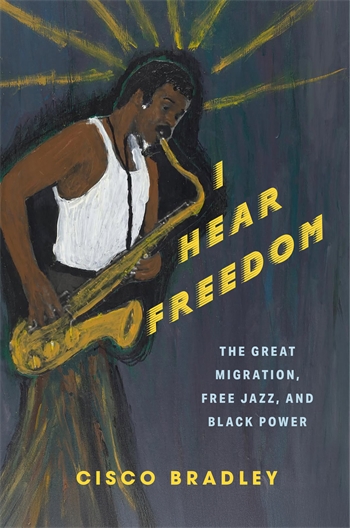
I Hear Freedom The Great Migration, Free Jazz, and Black Power
Cisco Bradley. Foreword by Gabriel Jermaine Vanlandingham-Dunn
In the 1960s, a musical revolution took place in the industrial landscapes of Cleveland and Detroit. Disenchanted with the strictures of bebop, musicians forged a new style—free jazz. I Hear Freedom tells the story of free jazz and its connection to the broader Black experience. Cisco Bradley demonstrates that, although this part of the free jazz movement arose in the Midwest, it is deeply rooted in the musical traditions and aesthetics that the Great Migration brought from the South. A revelatory oral history, this book shows that free jazz is a uniquely Black style shaped by mobility, community, and the struggle for freedom.
Hannibal Lokumbe Spiritual Soundscapes of Music, Life, and Liberation
Lauren Coyle Rosen and Hannibal Lokumbe
For Hannibal Lokumbe, music is a profound source of spiritual liberation. A pathbreaking orchestral composer and visionary jazz musician, he composes resonant works that give voice to the freedom struggle of the African diaspora, the broader African American experience, Indigenous histories, and humanity. This captivating, vital portrait and spiritual biography of Lokumbe provides a powerful collaborative account of his remarkable life and work.
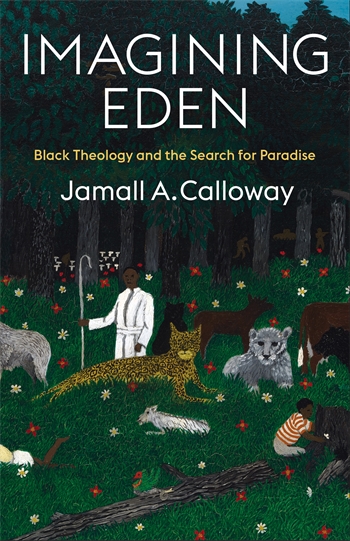
Imagining Eden Black Theology and the Search for Paradise
Jamall A. Calloway
A number of Black writers have drawn inspiration from the biblical tale of the expulsion from paradise. In this deeply interdisciplinary and poetically written book, Jamall A. Calloway explores the presence of Eden and the aftermath of the Fall in works by James Baldwin, Toni Morrison, Richard Wright, and Alice Walker. In reflecting on Eden, he contends, these writers rethought what paradise could mean in the face of the catastrophes of the Black experience. Revealing the richness of Black writers’ engagement with theology, Imagining Eden is a profoundly original consideration of literature and liberation, God and humanity.
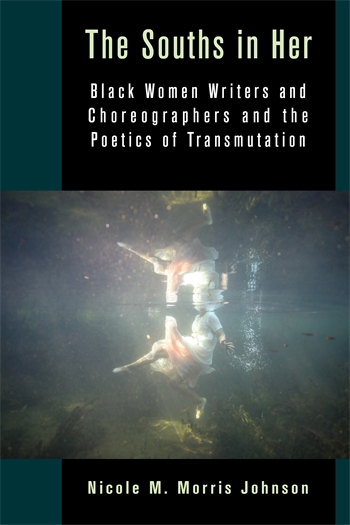
The Souths in Her Black Women Writers and Choreographers and the Poetics of Transmutation
Nicole M. Morris Johnson
Since the Middle Passage, the intellectual and physical freedom of Black women in the United States and the Caribbean has been constrained. Nicole M. Morris Johnson shows how key Black women artists transformed the enclosing narrative frames imposed on them, developing new forms of creative expression informed by the lived experiences and submerged histories of women across the Africana southern world. Considering the violence routinely inflicted on Black women alongside their artistic innovations, this book reveals a transmuted South that is rich in techniques for weaving liberatory works. Illuminating Black women’s singular contributions to Black modernity, it offers new frames for understanding their embodied and textual creative expression.
In this award-winning book, Jarvis C. McInnis charts a new account of Black modernity by centering the Tuskegee Institute’s vision of agrarian worldmaking. In contrast to traditional understandings of Black modernity as urban and premised on northward migration, McInnis foregrounds rural settings and practices of place making, rootedness, and liberatory agriculture. Shedding new light on the transnational influence of a historically Black institution in the US South, Afterlives of the Plantation remaps Black cultural, intellectual, and political histories down to the very soil.
The Lowest Freedom Racial Capitalism and Black Thought in the Nineteenth Century
Justin Leroy
The Lowest Freedom is an intellectual history of how economic dispossession shaped the meaning of freedom in Black thought from antebellum abolitionism to the rise of Jim Crow. By situating the work of figures such as Frederick Douglass, T. Thomas Fortune, Maria Stewart, David Walker, and Ida B. Wells within broader debates about land, labor, and capital, Justin Leroy provides a new framework for understanding how freedom was theorized, contested, and ultimately constrained in the aftermath of slavery. Bridging Black studies, intellectual history, and the history of capitalism, the book offers a reinterpretation of African American political thought that places the struggle for economic justice at its core.
Irreparable Evil explores the legacy of slavery and its moral and political implications, offering a nuanced intervention into debates over reparations. David Scott reconsiders the story of New World slavery in a series of interconnected essays that focus on Jamaica and the Anglophone Caribbean. He reflects on the paradoxes of seeking redress for the specific moral evil of slavery, criticizing the limitations of liberal rights–based arguments for reparations that pursue reconciliation with the past. Instead, he argues, in making the urgent demand for reparations, we must acknowledge the fundamental irreparability of a wrong of such magnitude.
James Baldwin was one of America’s most powerful analysts of the psychology of white supremacy. In this speech, delivered in 1965 at the Cambridge Union Society, he offers a devastating, but also strikingly empathetic, account of the role played by racism in American society.
Inequality, Science, and Reimagining Black Futures
During the first half of the twentieth century, a group of collectors and creators dedicated themselves to documenting the history of African American life. This multi-award-winning book tells the stories of these Black collectors, traveling from the parlors of the urban North to HBCU reading rooms and branch libraries in the Jim Crow South. Laura E. Helton chronicles the work of six key figures: bibliophile Arturo Schomburg, scrapbook maker Alexander Gumby, librarians Virginia Lee and Vivian Harsh, curator Dorothy Porter, and historian L. D. Reddick. Offering new ways to understand Black intellectual and literary history, Scattered and Fugitive Things reveals Black collecting as a radical critical tradition that reimagines past, present, and future.
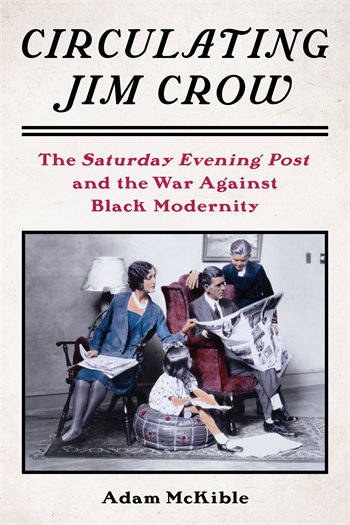
Circulating Jim Crow The Saturday Evening Post and the War Against Black Modernity
Adam McKible
Circulating Jim Crow demonstrates how the Saturday Evening Post used stereotypical dialect fiction to promulgate white supremacist ideology and dismiss Black achievements, citizenship, and humanity. Adam McKible tells the story of the rise and influence of George Horace Lorimer, the Post’s longtime editor, and examines the white authors who provided the editor and his readers with the caricatures they craved.
In a series of stories and essays, James B. Haile III traces how Black speculative fiction responds to enslavement, racism, colonialism, and capitalism and reveals a life beyond social and political alienation. This award-winning book transports readers to alternative worlds and spaces while remaining squarely rooted in present-day struggles. Offering new ways to grasp the meanings and implications of Black freedom, Haile invites us to reimagine history and memory, time and space, our identities and ourselves.
Colored Insane Slavery, Asylums, and Mental Illness in the Nineteenth Century
Diana Martha Louis
The nineteenth century in the United States witnessed the end of slavery and the expansion of another form of confinement: the asylum. In this book, Diana Martha Louis explores Black experiences and views of mental disability in the nineteenth century, shedding light on the lives and struggles of the “colored insane.” She demonstrates how psychiatric discourses made Blacks “mad” both by inflicting real psychological harm within asylums, plantations, jails, and society writ large and by constructing mental disorders according to prevailing notions of race, class, gender, and sanity. Combining literary and historical analysis, Colored Insane is a rich account of nineteenth-century Black Americans’ experiences of mental illness and wellness.
There is a persistent gap in life expectancy between Black people and their white counterparts in the United States. It is a direct result of structural racism within American society and has nothing to do with genetic differences. Why Black People Die Sooner is a powerful and rigorous examination of the ways racism shapes health and disease. Joseph L. Graves Jr. demonstrates that the medical profession still fails to grasp basic facts about race, tracing how deep-rooted falsehoods have perpetuated the disparity between Black and white lifespans.
Politics, Activism, and Black Intellectual Life
We Are Each Other’s Business Black Women’s Intersectional Political Consumerism During the Chicago Welfare Rights Movement
Nicole M. Brown
In the 1960s and 1970s, the Welfare Rights Movement organized at both local and national levels, advocating for poor people’s inclusion, dignity, and autonomy. We Are Each Other’s Business examines Black women’s leadership within the Chicago Welfare Rights Movement, recasting their consumer activism as a form of Black feminist technology. Bringing together historical sociology, computational methods, and intersectional Black feminist theory, this book offers innovative and generative insights into Black women’s struggle for political and economic equity.
This book presents the trailblazing political scientist Martin L. Kilson’s essays on leading Black intellectuals of the twentieth century. He argues that their trajectory was determined by the interplay between formal ideas and Black egalitarian struggle. Offering timely and engaging insights into the lives and work of pivotal Black intellectuals and activists, Black Intellectuals and Black Society sheds new light on the abiding questions and debates in Black political thought.
Lucy Diggs Slowe (1885–1937) is one of the most remarkable and accomplished figures in the history of Black women’s higher education. In 1922, Slowe was appointed the first Dean of Women at Howard University, making her the first Black woman to serve as dean at any American university. Her Truth and Service showcases Slowe’s speeches, articles, and letters, illuminating her multifaceted accomplishments and her unwavering dedication to the quest for equality and justice. It is an inspiring testament to the lifelong struggle for social justice.
Columbia Books on Architecture and the City Distributed by Columbia University Press
Mapping Malcolm continues the project of reinscribing Malcolm X’s memory and legacy in the present by exploring his commitment to community building and his articulation of a global power analysis as it continues to manifest across New York City today. This book explores the limits and possibilities of the archive; the political, material, and philosophical legacy of the Black radical tradition; the Black diaspora; and the state.
This website uses cookies as well as similar tools and technologies to understand visitors’ experiences. By continuing to use this website, you consent to Columbia University Press’ usage of cookies and similar technologies, in accordance with the Columbia University Press Blog Cookie Notice.