Home > Academia/Education / Behind the Scenes / Columbia University / Columbia University Press / Columbia University Press Distinguished Book Award / Columbia UP Development / Press News / University Press News / Women's History Month
Jennifer Crewe: A Legacy of Leadership at Columbia University Press
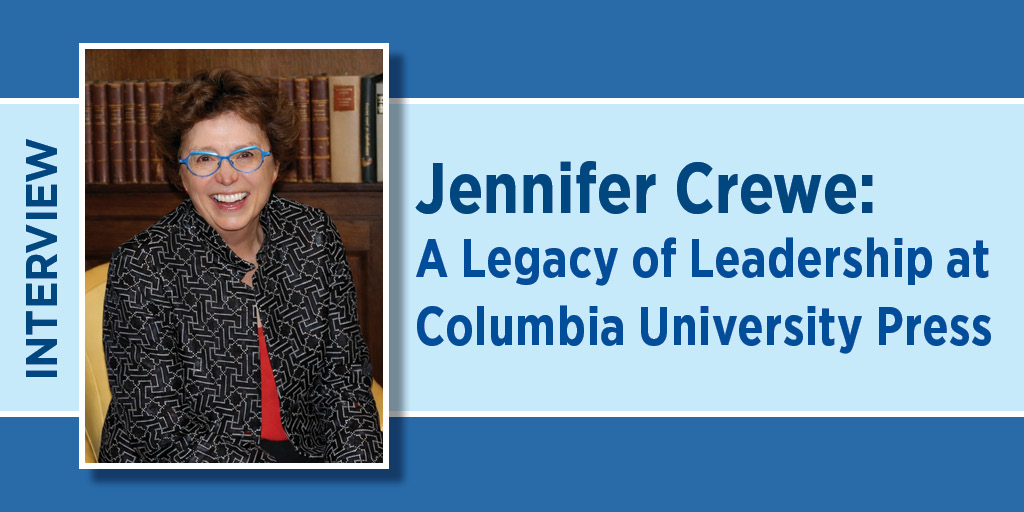
On March 31, 2026, Associate Provost and Director of Columbia University Press Jennifer Crewe will retire after forty years at the Press. Her career reflects a steady track that began during graduate school as a part-time editorial assistant and culminated in 2014, when she became the first female director of an Ivy League Press.
Throughout her four decades in publishing, Crewe not only helped shape the industry but also guided the Press with a strategic direction that strengthened ties with Columbia University, while working to create more equitable pathways for women in publishing. In addition to her leadership at Columbia University Press, her service work across the industry and in professional associations contributed to changes that continue to this day.
In recognition of Women’s History Month and its theme, Leading the Change: Women Shaping a Sustainable Future—which highlights women who have reimagined and rebuilt systems to ensure enduring impact across educational, economic, and cultural spheres—we spoke with Crewe about her path to leadership and the lasting impact of her efforts to integrate the Press with Columbia University.
Maritza Herrera-Diaz: Your first foray into publishing was while you were an MFA student, taking on a part-time role at Columbia University Press. After graduating, you chose to remain in publishing. What was it about academic publishing that felt right to you at that moment? When did you realize that it was more than just a job—it was a career path?
Jennifer Crewe: I needed a job during graduate school. I was an MFA student at the Columbia School of Arts and worked part-time at the Press, and realized that I liked this kind of work—you had one foot in the business world and one in the scholarly world. Also, I knew I’d need a job after school was over, and I never wanted to be taught poetry by someone like me—just out of school—so I thought others would feel the same. A string of adjunct jobs wouldn’t bring in enough money—not that publishing did, but at least it was a more or less stable job. I climbed up the ladder there, and when I became an acquisitions editor at Scribners and then at Macmillan, thought I would stay in publishing. I returned to Columbia University Press in 1986. And while at various points in my life I was offered other jobs, I decided that this was the place for me. Like many women, I found it wasn’t easy to uproot my family and move elsewhere.
Herrera-Diaz: You’ve shared the story of refusing to learn to type in high school because you “didn’t want to end up a secretary,” only to recognize later how essential that skill was for professional advancement. Looking back, what did that experience teach you? What advice do you have for women who find themselves “stuck” in a role because of their skills and expertise? How can they break the cycle to move their career forward?
Crewe: Now everyone learns to type in third grade, but that wasn’t the case when I went to school. Men rarely learned; women learned as young adults, and many went on to become secretaries. The experience of learning to type in order to slowly retype my boss’s letters (composed on a manual typewriter and then meticulously copyedited) on an IBM Selectric was humbling, but I learned a lot through typing those letters, as he was writing to authors about their manuscripts. I’d say you definitely need certain skills for certain jobs, and if you don’t have those skills, attain them. Once you have them, step in and do the work that you might not have been asked to do. Show that you are eager and willing and that you have the skills.
Herrera-Diaz: You’ve mentioned turning to service work when advancement to press directorship seemed out of reach. In what way did this work empower you or give you agency within the industry? When you think about the changes that came out of those efforts, which ones are most meaningful to you today? And how did these experiences shape your leadership journey?
Crewe: Well, I always did “service work,” but at a certain point, I felt I wasn’t advancing in the company, so I leaned more into that work. In book acquisitions one faces into the company and develops a reputation there, but also faces outward to authors, to the university, and to the industry and other scholarly organizations. So you have two different positions in the world. When the inward-facing one wasn’t working as well for me, I did more in the outward-facing part of the job. Some publishing positions are better situated than others for developing that outward-facing reputation, but I do think it’s important both to know what’s going on outside your specific place of work and to develop a reputation in your industry. That reputation will help you in your job, but it may also lead to other opportunities elsewhere.
On the MLA Executive Council, I offered information that was from outside the professor group in the academy, and that was helpful, or at least different from what the group had. At the Association of University Presses I offered what was useful to the group, coming from a smaller press within the larger cohort of presses. These experiences, and learning from others in positions of leadership at their presses, both larger and smaller than Columbia, helped inform my management skills at my home press.
Herrera-Diaz: As you are an alumna of Columbia University, how did your connection to the institution shape your approach to leading the Press? How did that perspective influence the way you navigated relationships across the university?
Crewe: Being an alumna made me care about the university in a way that I probably wouldn’t have otherwise. Not that you need to have a degree from the university you work for. It just instills in you the importance and the particularities of the place early on. When I first started working for the Press, of course, I knew a number of the faculty from having taken their courses, and I wasn’t afraid to approach them or their colleagues for advice.
Herrera-Diaz: The Press became formally integrated into the university during your leadership. In what ways did this integration strengthen the Press’s role within the university, and why did you see that as a strategic priority?
Crewe: I had clear goals when I became director, and I was lucky in that the provost had similar goals. From the start, it was important to me that we become formally integrated into the university as a unit. The Press had been created in 1893 as an affiliate of the university and was a separate 501(c)(3) organization. As a result, many at the university didn’t know what we did, or even that we existed. I felt strongly that we should be clearly aligned with the university’s academic mission and priorities, and more visible to faculty and administrators. So I set about making that change.
Educating the Columbia community about the Press took much longer than I expected. It took time for various nonfaculty offices of the university to understand who we were and how we operated, and it also took longer than I thought for the staff to make the transition. But eventually we did, and it has been, in my view, a great thing.
When the university took over administrative details like payroll and benefits, my time opened up so that I could focus on our core mission. For example, I no longer spent hours dealing with insurance firms and renegotiating plans each year. Our staff gained better benefits, and I was freed from the constant management of those logistics.
That shift allowed me to focus on the work that really matters: building relationships with faculty and administrators, carefully considering the challenges facing our industry, and adapting accordingly. It had always been clear to me that the quality of what we publish is paramount to the faculty. So when I became director, we concentrated on strengthening that commitment, and over time, that focus has made a visible difference.
Herrera-Diaz: One of the things you did was to establish both an Advisory Council and a Faculty Advisory Board. Why did you feel it was important to create additional advisory structures beyond the existing Faculty Publications Committee, and how have these groups provided guidance for the Press to grow?
Crewe: When we were still our own 501(c)(3), we had a board of trustees, which included a number of publishers, and that structure worked well for the Press, though I think it was confusing to university administrators. After our transition, I didn’t want to lose that kind of thoughtful guidance, so we created new versions of what had already proven effective. The Faculty Advisory Board is made up of Columbia faculty who really have their finger on the pulse of the university. When we’re thinking through major strategic decisions—about the publishing program or about the Press’s place within the institution—they’re the people I turn to. I value their advice enormously, and I feel lucky to have the support of colleagues I so deeply respect.
In 2016 when I started our fundraising program, I established the Press’s Advisory Council—a group of deeply committed advisors who care about what we do and bring experience from the worlds of nonprofit organizations, the publishing industry, Columbia University, and for-profit business. They’ve helped us think through fundraising, of course, but also many of our other outward-facing initiatives. Over time, their insight and advocacy have helped us build reputational capital with donors and readers alike.
Displays on Campuss
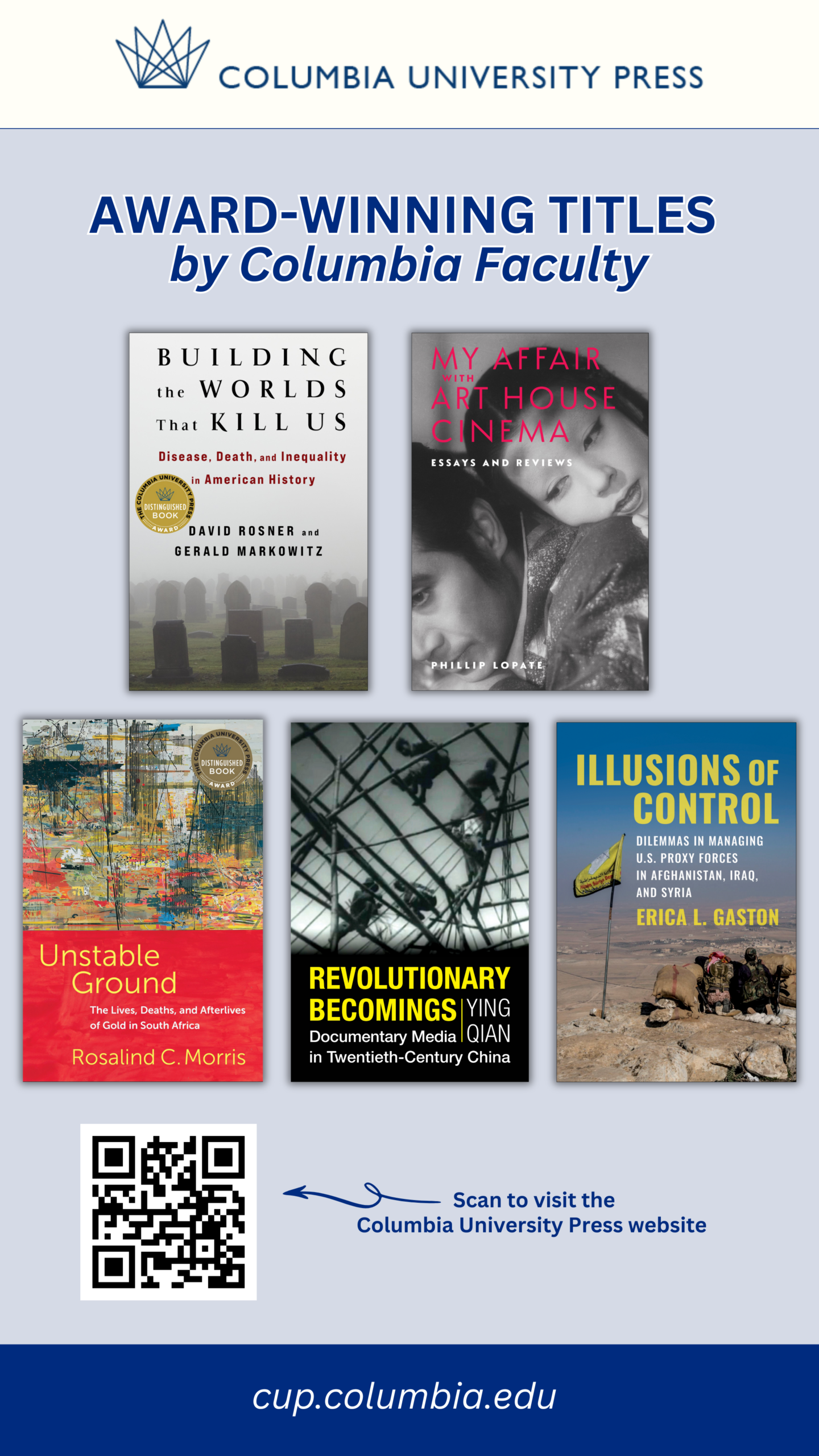
Digital Display at Butler Library, December 2025
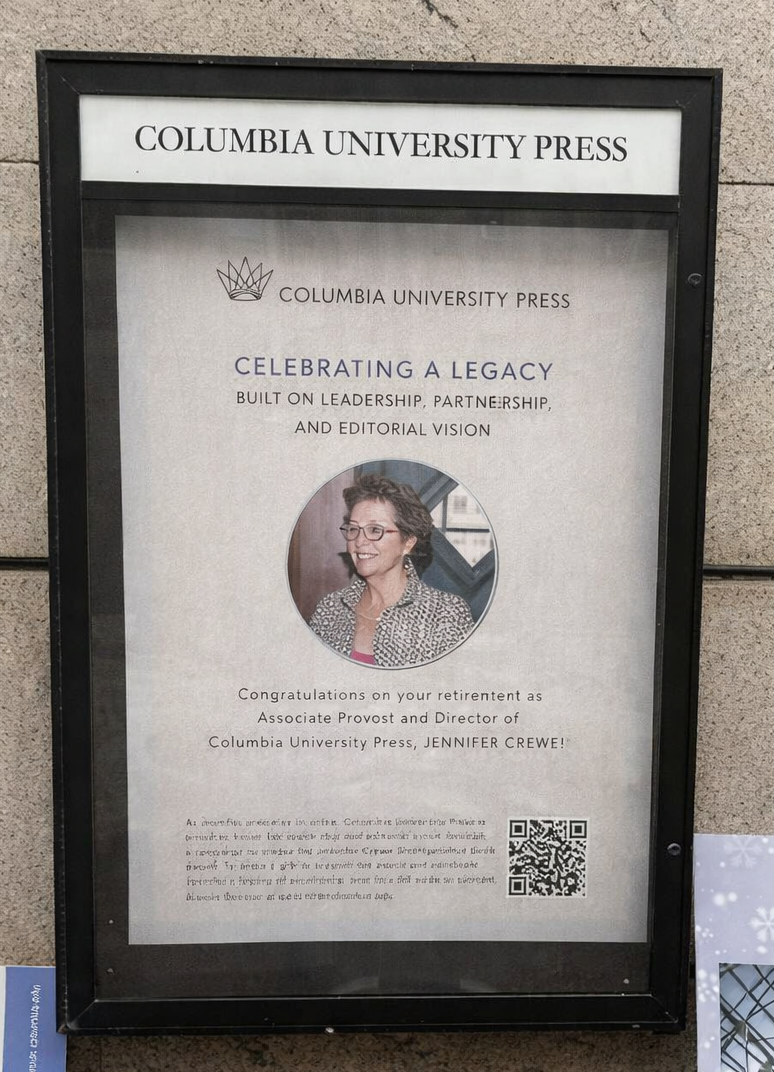
Vitrine on College Walk, Spring 2026
Herrera-Diaz: You’ve mentioned the importance of building relationships with Columbia authors and departments as well as expanding mission-based opportunities. How has that emphasis shaped the work of your editorial, marketing, and publicity teams?
Crewe: I realized that if we were going to strengthen our ties to the university, we had to think of ourselves not just as a publisher within Columbia but as a partner to it. It made sense to recruit faculty to be series editors and to develop publishing projects that fit within and furthered the mission of the Press and the university. So we now partner with many entities at the university and have developed new series with faculty there, such as Core Knowledge, a series of books done in conjunction with Columbia College and its core courses. We publish primers on sustainability with the Earth Institute, and we have an imprint with the business school.
Other mutually beneficial partnerships have connected us with departments and centers at the university that publish their own work—Columbia Books on Architecture and the City, Sundial House, and most recently the Italian Academy, among others. We’ve been able to bring them into the fold by handling the marketing, sales, and distribution side of the business, while they focus on the editorial work and the intellectual mission behind their publications.
Our marketing and publicity efforts have also become much more intentionally integrated with campus life. Our team has a strong relationship with the public affairs office and works closely with them to identify cross-promotional opportunities. Our Columbia authors, for example, are regularly interviewed for Columbia News: Off The Shelf; their books are featured on the Columbia News Books page; and our suggested reading lists are often featured in the Columbia newsletter.
Visually, we now have a vitrine on College Walk, posters at Butler Library, and a permanent spot on the library’s digital display. And our publicists and authors leverage relationships across campus and with Columbia alumni groups to secure author events. For a time, we even partnered with Columbia Global Centers on virtual book talks.
All of this grows out of the same goal: to embed the Press more fully in the life of the university and to create structures that can mutually serve both Columbia and our institutional missions.
Herrera-Diaz: You led the Press during one of the most trying periods of the decade—COVID-19 and the Black Lives Matter protests. At a time when many people felt helpless in the face of racial injustice, the Press responded with the launch of the Black Lives in the Diaspora: Past / Present / Future series. Can you walk us through how the concept emerged and how your team developed it so quickly?
Crewe: We already published robustly in Black Studies, so while I did what I could to help make those books more visible and encourage our editors to continue to acquire them, I wanted to do something more. A group of us at the Press came up with the idea to partner with Howard University. Our Advisory Council member Steve Trachtenberg (a Columbia College alumnus) is the former president of George Washington University. When I brought up the idea of expanding our publication program in Black Studies, he offered to introduce me to the President of Howard University, Dr. Wayne A. I. Frederick, now a member of our Advisory Council.
I owe a lot to Steve’s connection and introduction. Dr. Frederick very quickly put me in touch with Dr. Rubin Patterson, Howard’s Dean of Arts and Sciences, and we got to work. From the start, it was very important to me that the series remain a true collaboration between the two universities. We created an editorial board of up to four faculty from Howard and four from Columbia with the goal of having the group meet monthly to discuss new projects and recommend them for publication. There was immediate momentum from the series editors, and scholars took an interest in the series right away. We launched the series with the first book at an event at the Schomburg Center for Research in Black Culture (one of The New York Public Library’s research libraries) a few years ago, and now we have seventeen books in the series.
Building and growing from the inception of the series through to where we are today has been a true team effort involving staff across the Press. We now have a dedicated acquisitions editor handling the books. Howard University was the only HBCU to have had a press, and we hope to publish a Howard imprint with them as well. They would create their own editorial board and bring in manuscripts and we would handle the back end, editing, producing, and distributing their books.
Herrera-Diaz: What prompted your fundraising initiative, and how has the program evolved since you started it?
Crewe: When I became director, I wanted to start a fundraising program because I knew that other presses had done so successfully and that we’ve always competed against a number of larger Ivy League presses that had huge endowments created years ago. We needed to develop a cushion against decreasing revenue because of the demise of our reference book program (due to the internet), which used to support losses in the book program. We also needed more funding, and it wasn’t clear that the university would be able to provide additional subsidies. So I wanted to raise funds myself.
I hired a development director, and I have worked closely with her to create a strong foundation from which we can build. We have a nice cadence of annual events, from our Advisory Council meetings to salons for donors to the schedule of annual fund appeals. I have learned that it takes quite a bit of time and education for people to understand that we’re fundraising, and why we need philanthropic support.
With that foundation in place, we’ve been able to come up with some bigger projects and engage in major giving conversations. The Press needs endowment support to continue doing all that we do, and much of our recent time has been spent working on larger gift conversations that will provide support for the Press’s future.
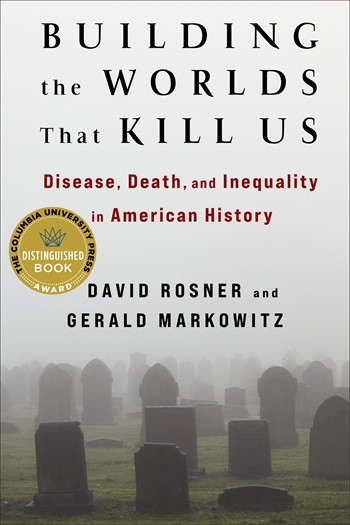
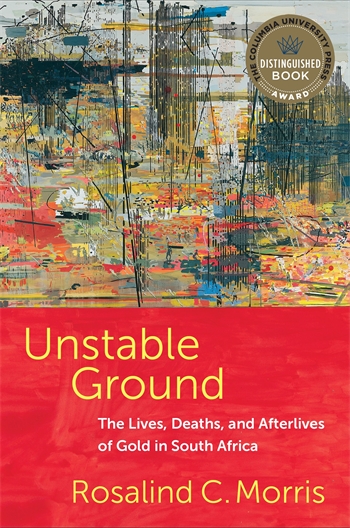


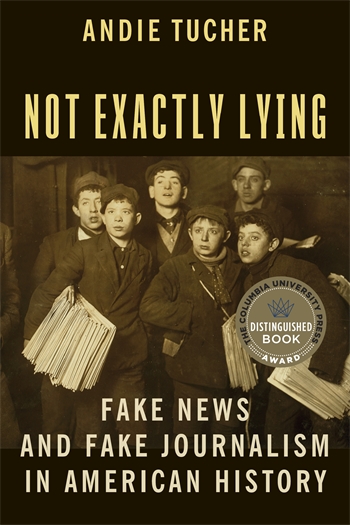
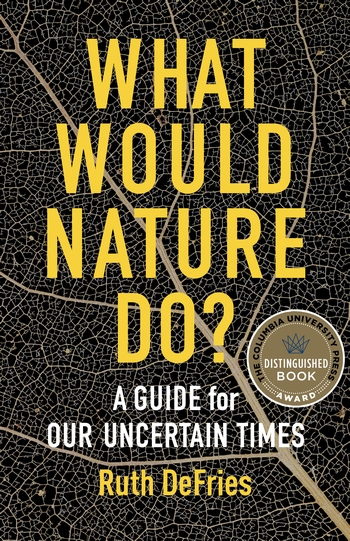
Herrera-Diaz: In 2015, you established the Columbia University Press Distinguished Book Award in partnership with the Office of the Provost. Now, eleven years later, the Press has launched a fundraising campaign to endow the award and rename it in your honor. What does it mean to you to see that initiative continue, and to have your name associated with it? When you think about the award’s future and how it will continue to celebrate outstanding scholarship, what do you hope the award will inspire in the years ahead?
Crewe: From the beginning, the award was a successful endeavor. I started it as a way to draw attention to our work at the university and to entice faculty with important books to publish them with us. (About 9 percent of the books we publish are from faculty, a high percentage in the university press world. We don’t want to publish too many, or they will think of us as a “vanity” publisher, but we don’t want to publish too few either. We want to compete with other publishers for the best books by Columbia faculty.) I give the faculty publication committee one extra job each year. A subcommittee of that group reads about five new books by faculty from the list we give them and picks the most important one. The provost’s office generously funds both the prize money and the costs of the reception, which is a lot of fun. A member of the subcommittee speaks about why the book was chosen, and then the winner speaks. The faculty think it’s important, and they are celebrating each other’s work. I’m deeply honored by the fact that the award will now be named for me and that it will continue after I’ve retired.
Herrera-Diaz: Columbia University Press is known for its collegial, collaborative environment with an openness to new ideas. Was that culture already in place when you stepped into leadership, or did you intentionally work to shape it? How do you think about your role in fostering that environment?
Crewe: To a certain degree we always had that culture, but I thought it was important to encourage collegiality and collaborativeness. We are not a large organization so we can know each other, and we are all working toward the same goal, with the same mission. I’ve made an effort to focus on shared goals across departments and to encourage collaboration. I try to foster a culture of mutual support and respect.
Herrera-Diaz: Looking back on your career journey, what advice would you offer women who aspire to move into leadership roles?
Crewe: When I was interim director, waiting for the administration to run a search and make a final hiring decision, I was doing two jobs, and it was hard. I was on a committee of the Association of American Publishers at the time, and at the end of one of our monthly meetings, the chair asked me how things were going. I told him. Then he said, “I’d write the provost, listing all the important changes you’re making as interim, so that he knows what you’re doing.” Now this is not rocket-science advice, but of course I was so busy I never thought to do it. So I returned to my office and started on the memo, which ended up being about three pages long. It must have worked because soon after, a search committee was formed. So my advice is to not be afraid to be informative and to call out your strengths when necessary. Men do this kind of thing all the time. Perhaps younger women do it now too. I just always assumed people would naturally see that I was doing good things. It’s not helpful to assume that.
Jennifer, thank you for taking the time to speak with us and for your outstanding leadership. In your forty years at Columbia University Press, you have been a trailblazer in scholarly and university press publishing and also an inspirational leader who strengthened the Press’s role within the university and the broader publishing community while fostering a culture of equity and inclusion. You have left a lasting impression on the Press and the community it serves—one that will continue to inspire future generations. Those who wish to honor your legacy may consider making a gift to support the Jennifer Crewe Distinguished Book Award. We thank you for your extraordinary service and wish you the very best in the next chapter of your life.
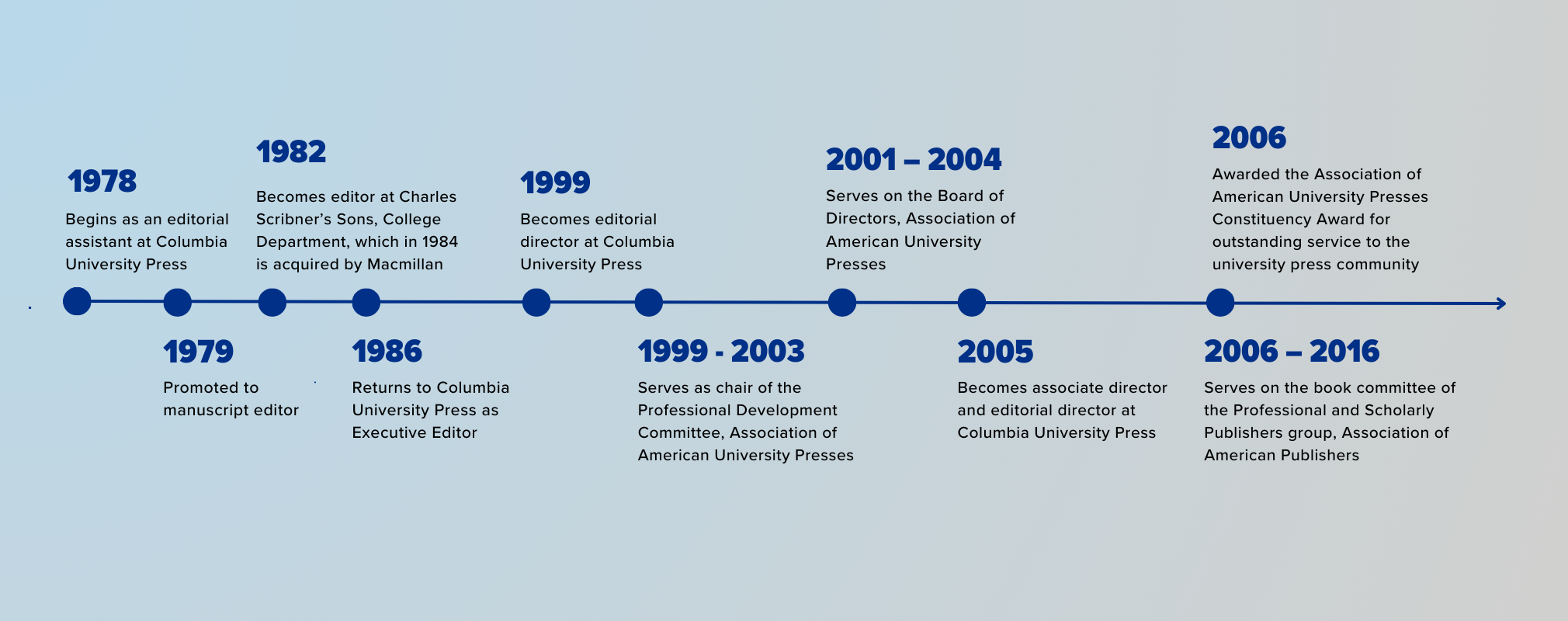
Jennifer Crewe's Path to Leadership

Categories:Academia/EducationBehind the ScenesColumbia UniversityColumbia University PressColumbia University Press Distinguished Book AwardColumbia UP DevelopmentPress NewsUniversity Press NewsWomen's History Month
Tags:Academic PublishingAcquisitions EditorAdvisory CouncilAlumni LeadershipAssociation of University PressesBlack Lives in the DiasporaBlack Lives in the Diaspora: Past Present FutureBlack Lives MatterBlack studiesBoard Of DirectorsColumbia UniversityColumbia University PressCOVID-19 ResponseDistinguished Book AwardDiversity And InclusionEditorial LeadershipEquity In PublishingFaculty Advisory BoardFundraising In Higher Educationhigher educationHoward University PartnershipInternational Women's DayInternational Women's Day 2026Ivy LeagueJennifer CreweleadershipMaritza Herrera-DiazProfessional ServicePublishing IndustryScholarly PublishingSustainability In EducationUniversity LeadershipUniversity Press PublishingWomen In LeadershipWomen In Publishingwomen's history monthWomen's History Month 2026